
Sustainable, because the building remains
The most sustainable building is often the one that is already standing. Schanzenstraße 24 is being refurbished rather than replaced, and brought up to today's technical standards. Over 50 years, it will cause 43% less CO₂ than a comparable new build.
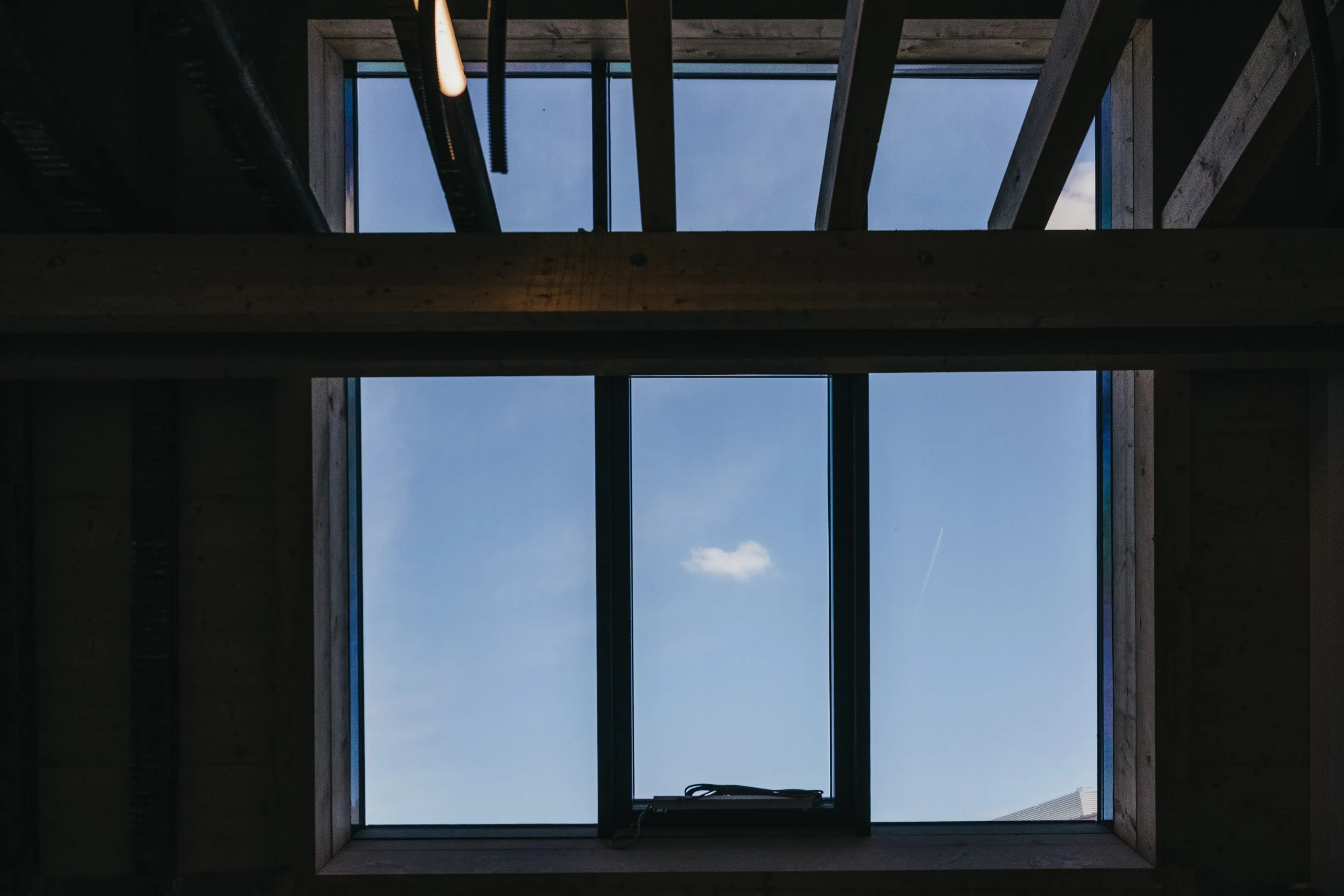
Keeping a building is the biggest climate lever
Giving an existing building a new use, rather than demolishing it and building anew, saves more CO₂ than any other measure. The deciding factor is that the building stays.
Regulations and certificates mainly look at operational carbon, the energy used while a building is in operation. That favours new builds. The question of whether to demolish and rebuild at all is skipped.
That is why we argue for looking at the whole picture: embodied and operational carbon together, over the entire life of a building.
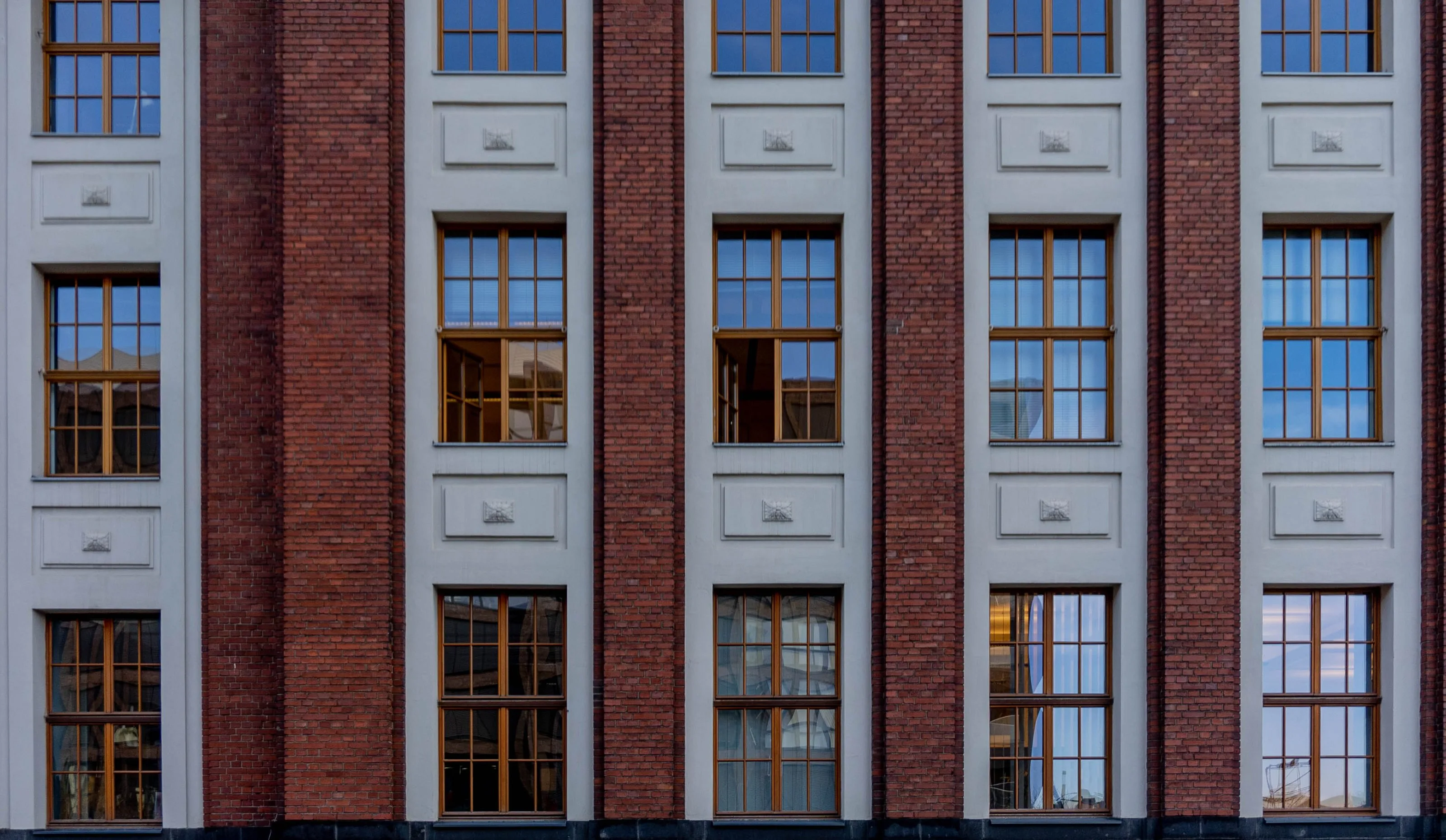
Four terms, briefly explained
Adaptive reuse
Operational carbon
Embodied carbon
Whole life-cycle carbon
The result for Schanzenstraße 24
A life-cycle assessment by Agradblue compares the reuse of Schanzenstraße 24 with a hypothetical new build of the same use, size and standard.
- less CO₂ over 50 years than the new build
- 43%
- less CO₂ per year
- around10,600kg
- in an average petrol car: that is how much CO₂ it saves every year
- around60,000km
Why the saving is so large
Schanzenstraße 24 is an existing office building from 1906. We are refurbishing the roof, the building services (air-source heat pump), the insulation and the interior. What carries and defines the building stays.
A new build in its place would be a carbon-intensive reinforced-concrete building. The heavier the existing building, the more CO₂ is already locked into it, and the more you save by keeping it.
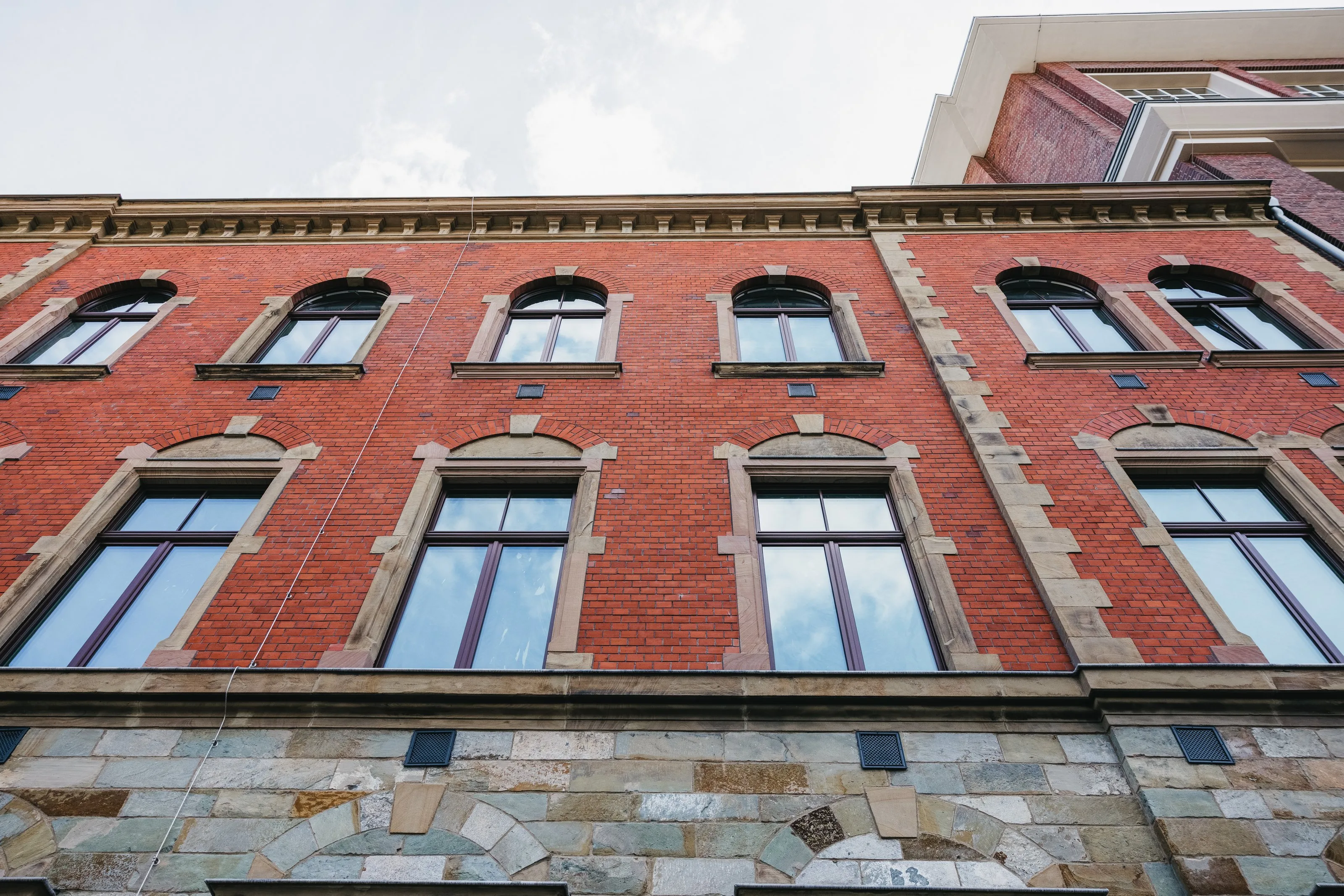
Reuse or new build: when the CO₂ is emitted
Share of the construction phase in total emissions over 50 years. With a new build, most of it is emitted before anyone has even moved in.
- reuse of Schanzenstraße 24
- around25%
- comparable new build
- around60%
What else the analysis shows
Efficient operation is not enough
Even the most efficient new build cannot catch up
Demolition not yet included
Energy and climate
What we are doing at Schanzenstraße 24.
Heat from a heat pump
Ceiling heating and cooling
Automatic fresh-air ventilation in all offices
Around 30 solar panels on the roof supply part of the building's general electricity
LED lighting that switches on and off according to occupancy
Target
What we preserve
The listed elements of Schanzenstraße 24 are preserved and restored: the façade, the staircase and the historic meeting rooms.
They are the reason why keeping the building is worthwhile: for the climate and for everyone who works here.
Mobility
4 EV charging points at two double charging stations
At least one accessible parking space
E-bike charging in the courtyard
Light rail line 4, Keupstraße stop, around 5 minutes' walk
Building technology
Fibre broadband from NetCologne
Power and network at every workplace
Accessible lift to all floors
Floor load of 2 kN/m² from the ground floor to the attic floor
Fire alarm system, emergency lighting, video intercom
Frequently asked questions
Are there EV charging points?
Yes. There are four EV charging points at two double charging stations, as well as e-bike charging in the courtyard.
Is an old building worse for the climate than a new one?
No, the opposite is true. Because the existing structure is retained, Schanzenstraße 24 will cause 43% less CO₂ over 50 years than a comparable new build.
Is the building certified?
Not yet. The target is BREEAM In-Use certification with a "Very Good" rating.